


From Events to Ecosystems: The Future of Medical Conferences
I still remember the first medical conference I attended, where someone proudly handed me a USB drive instead of a CD-ROM and the room actually applauded.
That was considered innovation back then.
Today, the bar has moved so far that if your conference strategy ends with the closing keynote, you're already behind.
The Format We Inherited Wasn't Built for This Industry
Medical conferences were designed around a simple premise: get the right people in one room for a few days and let knowledge travel by word of mouth and through printed abstracts.
That model served us well for decades. It still has its place; there's nothing quite like a face-to-face conversation with a cardiologist from Singapore and a device engineer from Stuttgart, both standing in front of the same poster at 11 AM.
"But the pandemic didn't just disrupt medical conferences. It quietly revealed something we hadn't fully acknowledged: the most valuable thing about these events was never the venue. It was the network. And networks, by their nature, don't need to be switched off after three days."
What "Ecosystem" Actually Means in Practice
People throw this word around a lot. So let me be specific.
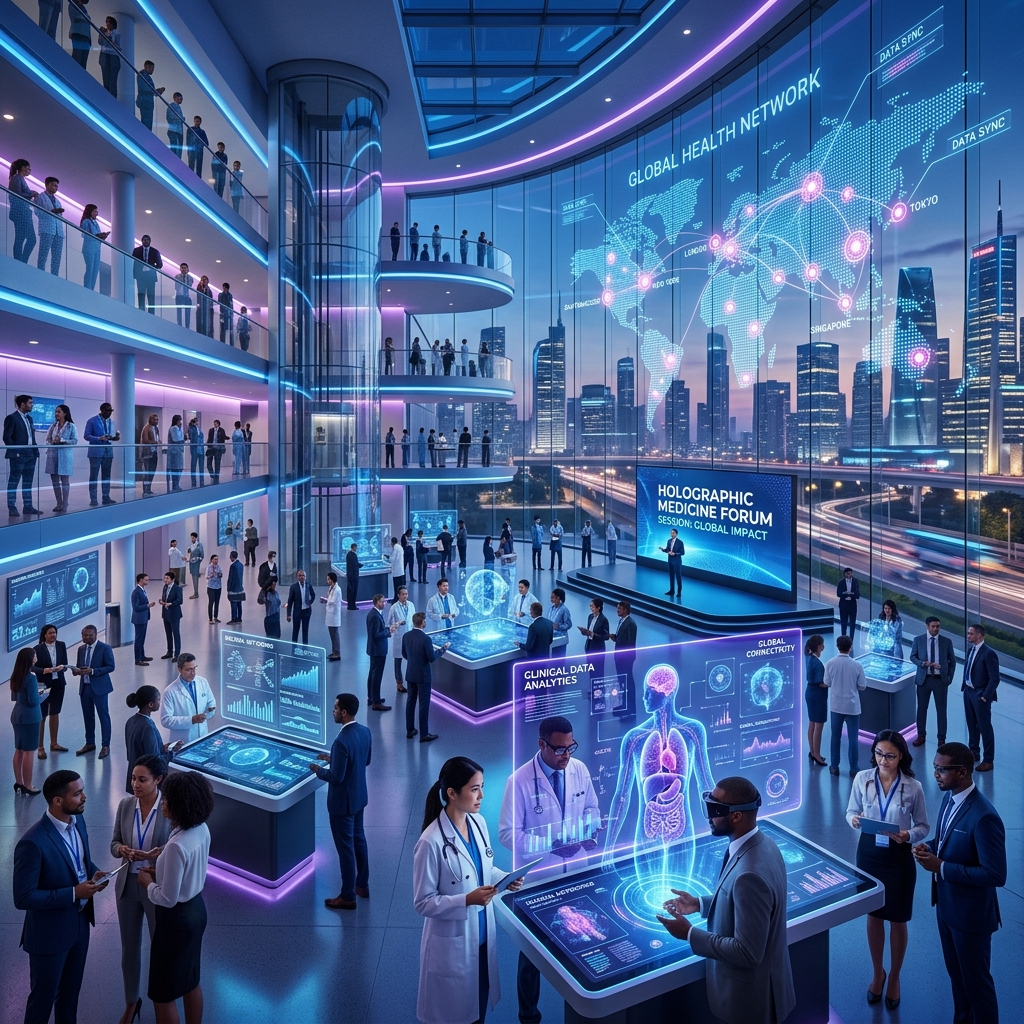
An ecosystem, in the context of medical conferences, means a connected environment where value is created continuously, not in bursts. Where a clinician in Chennai can join a live roundtable hosted out of Boston. Where a MedTech startup in Hyderabad can get in front of European investors without clearing three weeks of travel budget. Where the content from a session doesn't disappear behind a paywall six months later, but lives as a searchable, referenceable resource.
It means the conference has a before, a during, and a deliberate, structured after.
Some examples of what this looks like on the ground:
- Year-round community engagement: Specialty-specific forums, peer discussion threads, and monthly expert webinars that keep the audience connected between annual events.
- Data-driven programming: Session topics aren't chosen by gut feel. Organizers now track what content drove the most engagement, what questions went unanswered, and what speakers actually moved the needle for attendees.
- Sponsor integration that isn't just logo placement: In a mature ecosystem, a pharmaceutical company or device manufacturer isn't sponsoring a lanyard. They're co-creating content, participating in working groups, and building visibility over months, not a morning slot on day two.
The Technology Gap Nobody Talks About Enough
Here's where things get honest.
A lot of healthcare organizations want to build these ecosystems. The vision is clear. The execution, however, runs into a wall — and that wall is usually technology infrastructure.
Building a connected, always-on conference ecosystem requires more than a good event app or a Zoom link. It requires secure platforms that can handle sensitive clinical discussions. It requires identity and access management so only the right people see the right content. It requires integrations across multiple tools, webinar platforms, CRMs, community platforms, and analytics dashboards that actually talk to each other.
And as these platforms grow in complexity, so does the attack surface. Medical data, research IP, and commercial partnerships all intersect in these environments. That's not a minor consideration; it's a foundational one.
Organizations that underinvest in the technology layer of their conference ecosystem will find that the community they're trying to build erodes. Attendees lose trust when platforms break. Sponsors pull back when data isn't secure. Speakers disengage when the experience feels fragmented.
Three Shifts Worth Watching Right Now
- Hybrid isn't going away, but it's getting smarter. The early days of hybrid were essentially two separate events running simultaneously, badly. That's changing. Organizers are now designing experiences where the in-person and virtual tracks are genuinely complementary.
- The rise of smaller, higher-intent gatherings. The mega-conference still has its place for brand visibility and breadth. But there's a real trend toward curated gatherings of 100 to 300 people, invitation-only, deeply focused, intensely networked. These are the rooms where actual decisions get made.
- AI-assisted matchmaking and personalization. Attendees don't want to scroll through 200 sessions and figure out what's relevant. AI tools are now doing this curation — matching delegates to sessions, to other attendees, to exhibitors based on specialty, stated goals, and behavioral signals.
The Bigger Point
The healthcare industry moves at a pace that most other industries don't fully appreciate. New devices, new clinical evidence, new regulatory frameworks, new pathogens — the knowledge cycle is relentless. Medical conferences were built to serve that cycle. The ecosystem model is simply the next evolution of how that service gets delivered.
Organizations that treat their events as one-time activations will find it harder and harder to justify the cost to their sponsors, to their attendees, and to their own boards.
The ones that invest in the infrastructure to build genuine, year-round communities of practice? They won't just survive the shift. They'll define what medical conferences become.
Building the Right Infrastructure Matters
At Tawny Technology Solutions, we work with organizations navigating exactly this kind of digital transformation — from building secure, scalable software platforms to putting the right cybersecurity frameworks in place.
If you're thinking about how technology can strengthen the backbone of your conference ecosystem, we'd genuinely like to have that conversation.
Talk to an Expert